


Scraper Chain Conveyor
A scraper chain conveyor is very similar in principle to a drag chain conveyor — both use chains with “flights” or “scrapers” to move bulk material — but scraper chain conveyors are usually designed for shorter distances, steeper inclines, or vertical movement, and for handling sticky or wet materials.
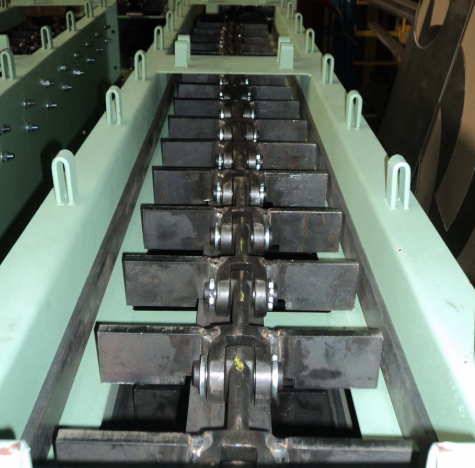
🔹 Key Features
- Continuous Chain with Scrapers (Flights): A chain runs inside a trough or casing; scrapers fixed to the chain push or pull material along.
- Open or Closed Trough: May be enclosed (for dusty or hazardous material) or open (for easy cleaning or monitoring).
- Multiple Configurations: Horizontal, inclined, “Z,” or vertical arrangements.
- Heavy-Duty Design: Wear-resistant chains, sprockets, and liners.
🔹 Applications
- Ash handling beneath boilers.
- Removing sludge or grit from wastewater treatment plants.
- Transporting sticky, hot, or abrasive bulk materials (e.g., coal, clinker, sand).
- Agriculture: silage, wet grains, or feed.
- Mining and cement plants for short-distance transfer.
🔹 Advantages
- Handles sticky, wet, or abrasive materials better than screw conveyors.
- Can run on steep inclines or vertically.
- Robust and long-lasting.
- Enclosed versions keep dust or odor contained.
🔹 Limitations
- Limited conveying length compared to drag chain conveyors.
- Requires good tensioning and lubrication of chains.
- More wear on scrapers when dealing with sharp or gritty material.
✅ In short:
A scraper chain conveyor is ideal for moving sticky, wet, or abrasive bulk solids — especially over short or inclined routes — in industries like power generation (ash), wastewater treatment, agriculture, cement, and mining.